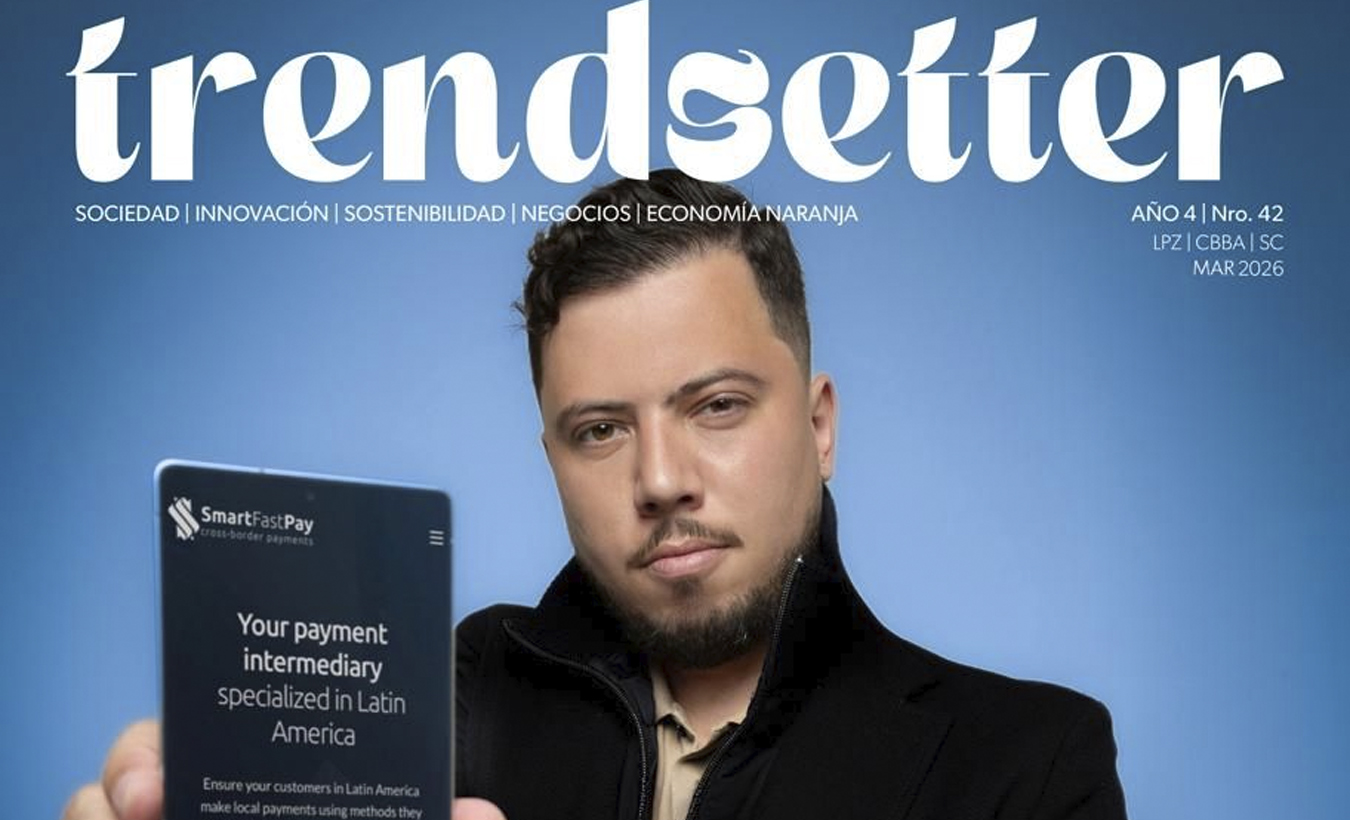
Bre-b is rewriting the Merchant Playbook in Colombia. Here's why:
Jul 16, 2026

Since its launch last October, Bre-B has ignited a massive surge in “Key” (Llave) registrations across the country. Now, our Colombia Country Manager Willmar Díaz, shares his perspective on how this new instant payment method is transforming the daily habits of Colombians and whether the long-awaited “PIX effect” has finally landed in Bogotá.
Willmar: Bre-B has definitely been a success. It demonstrates the country’s progress in modernization and shows that the collaboration between major players has positively impacted the trust of Colombians. Bre-B is the result of a public-private partnership that capitalized on existing private financial advances, which the Central Bank then standardized to achieve efficiency through interoperable ‘keys’ and unified QR codes.
Based on Central Bank figures, reporting over 600 million processed transactions, an average ticket of $42 USD, and over 100 million registered keys, we see sustained growth. It’s a major breakthrough for a system that is only six months old and still in its natural stabilization phase.
Regarding daily habits: more Colombians can now make real-time digital payments from any financial institution using a ‘key’ or QR code, 24/7. Whether it’s the neighborhood shop, a supermarket, an Uber driver, or a restaurant, you can pay anywhere that accepts the key or QR.
In this sense, it’s like having a massive highway for transactions to flow. Payments no longer depend on whether you have an account at a specific bank. It is a larger, public, open, and inclusive system. This has boosted electronic payments, leading more people to move away from cash.
While Brazil’s PIX was a successful model that inspired Bre-B, Colombia actually had early versions of immediate payments via mobile numbers years ago. However, back then, the networks didn’t talk to each other because there was no central coordinator. PIX’s influence was the catalyst that pushed the Central Bank of Colombia to take a leading role, similar to the Central Bank of Brazil, to achieve total coverage and transform the ecosystem.
SmartFastPay: So, for our international e-commerce and iGaming clients, “cash-outs” and instant settlements have always been an obstacle in Colombia. In what way is Bre-B closing the interoperability gap between major players like Nequi, Daviplata, and traditional banking?
Willmar: The advantage of having an instant, interoperable payment system driven by the state bank is precisely closing those gaps; getting all financial entities to speak the same language under a single “channel.”
Bre-B is the result of interconnecting different managing entities of the low-value payment system which, in turn, integrate various participating entities: traditional banks, neobanks, digital wallets, cooperatives, and other financial service providers.
The great news for our national and international clients is that when we connect them to Bre-B through our Smartfastpay solution, we aren’t just connecting them to a few banks or wallets, it’s not an “isolated rail.”
Today, we connect them to a massive network with standardized parameters that will progressively unify the user experience. This results in an increase in digital pay-in and pay-out transactions, reaching more Colombians and improving sales conversion for their products and services.
In this way, Colombia is moving from a fragmented system dependent on a few private financial entities to a public infrastructure for immediate payments. This opens up enormous opportunities for different business models, guaranteeing liquidity and scalability.
SmartFastPay: Looking at the 2026 roadmap, we can expect an increase in the dominance of Bre-b in Colombia. What is still to come this year?
Willmar: The implementation of Bre-B, with payments via QR codes or digital “keys,” has already driven the mass adoption of instant payments in Colombia. This represents a major cultural shift in how Colombians transact, though we must continue the work of education to ensure users fully embrace and adopt this solution.
It is essential to recognize the effort led by the Banco de la República and all ecosystem players in positioning Bre-B at its current level of recognition. Thanks to that work, its popularity continues to grow, opening the door to new functionalities that will be vital for both merchants and users.
Within the industry, we are seeing business models that are moving toward regulation, such as payment requests. However, it is the Banco de la República that will ultimately notify and officialize these advancements.
At Smartfastpay, we are ready to integrate every new feature that adds value to our merchants. Our commitment is to ensure that every company working with us doesn’t just adopt these technologies but turns them into a true engine for growth, backed by simple processes and real-time reconciliation.
Related content

Hyper-local vs global: Building a LatAm compliance strategy that actually scales
A strategic guide on navigating LatAm regulatory frameworks, solving the AML talent bottleneck, and turning compliance into a growth engine for digital expansion. Read more
Digital wallets in Peru: Still an extra or a barrier to entry?
Our Country Manager, Luis Pardo, analyzes the growing dominance of digital wallets as a payment method in Peru. Read more